
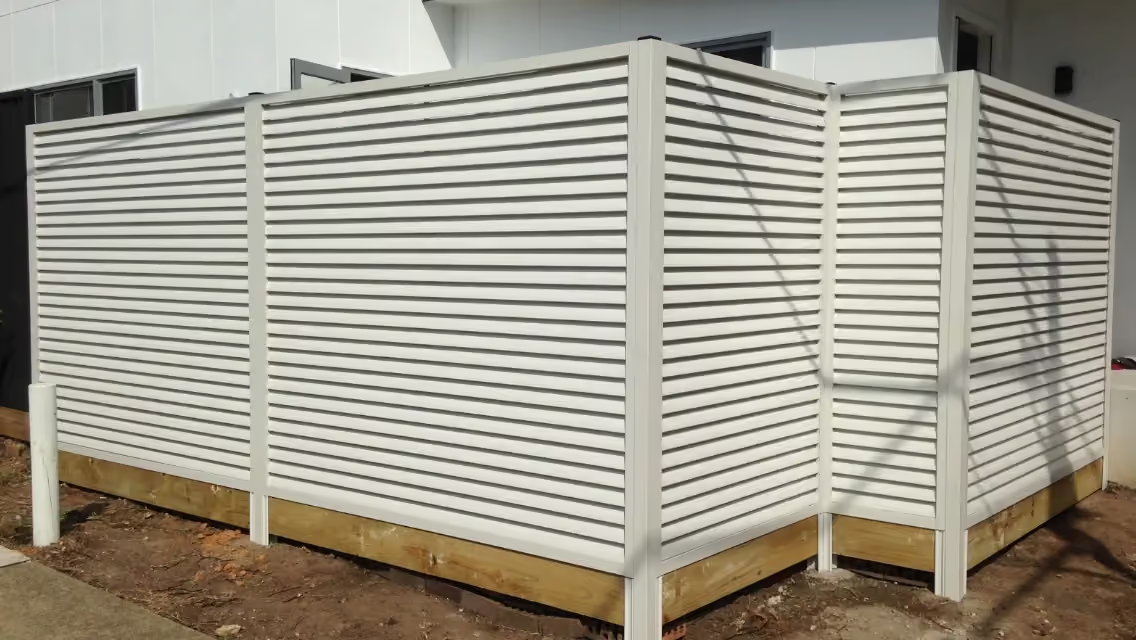
Before ordering a DIY aluminium slat gate kit, confirm the opening, supports, swing direction, hardware and assembly work. An opening measurement is not the finished gate size: hinge, latch and ground clearances must be allowed for. Ask for a written parts list and an agreed size drawing before authorising manufacture.
What does a DIY aluminium slat gate kit actually include?
A DIY aluminium slat gate kit is a set of components supplied for a gate that the buyer assembles or installs. The word “kit” does not tell you how much is already done. Some systems use a welded gate frame; others use a frame assembled with mechanical connections. Slats may arrive fitted, cut to size or needing cutting.
Compare the actual written scope, not just the product photograph. Confirm which preparation method applies to the gate being quoted, whether holes are pre-drilled and what instructions come with it. “Cut to size” does not automatically mean ready to hang.
| Part of the job | What to confirm |
|---|---|
| Frame and slats | The frame construction, slat profile, finish, gap, finished dimensions and any cutting or assembly left to do. |
| Hinges and latch | The selected hardware, whether it is included, how it suits the gate, and the allowances it requires. |
| Posts and caps | Whether posts are included or the design relies on suitable existing supports. |
| Fasteners and covers | The product-specific assembly screws, covers and caps included in the packing list. |
| Site fixings | Whether anchors, concrete or other support fixings are included, and who confirms suitability for the site. |
| Instructions and delivery | Assembly guidance, package sizes, delivery arrangements, unloading and what to do if something arrives damaged. |
This is a buying checklist, not a statement that every item is included in our gate kits. The accepted quote must identify inclusions, exclusions and the preparation method for your order.
How do you measure the opening before requesting a quote?
Start by recording the clear space where the gate will fit, rather than guessing a gate-leaf width. For an opening between existing posts, measure between the proposed fixing faces at the top, middle and bottom. Record every result and any lean or unevenness. If posts are not installed, explain what is proposed rather than treating the distance between walls as the gate size.
Send measurements with context
- A wide photo from both sides showing the whole opening and surrounding ground.
- Opening widths at the top, middle and bottom, in millimetres, with the measurement points identified.
- Your preferred finished height and any uneven ground or step.
- Post or wall material, visible condition and whether the supports are existing or proposed.
- A sketch marking the hinge side, latch side and intended swing.
- Any bins, mower, trailer or other item that needs to pass through.
Gate-leaf dimensions depend on the design and the selected hinge and latch. There is no universal deduction that suits every gate. Agree who calculates these allowances and approve the resulting drawing before parts are cut. Do not subtract an allowance twice because a measuring note and an order form use different definitions.
Should you choose a single or double gate?
Choose around the access you need and the space available for the leaves to swing. A single gate gives one moving leaf and one main closing point. A double gate can provide a smaller everyday opening plus wider access when both leaves open, but introduces a second leaf, centre alignment and a way to secure the less-used leaf.
| Consideration | Single gate | Double gate |
|---|---|---|
| Everyday access | Check the usable opening for people, bins and equipment. | Decide which leaf opens most often and whether that opening is sufficient. |
| Swing space | One leaf needs a clear sweep and suitable supports. | Check the sweep of both leaves, including nearby walls and paths. |
| Hardware | Confirm hinges, latch, stops and any lock option. | Also confirm the centre detail and how the inactive leaf is secured. |
| Uneven ground | Check ground clearance throughout the swing. | Check both leaves; a sloping opening may affect them differently. |
An opening being wide does not automatically mean a particular kit can span it. Ask whether the selected system is suitable or whether a different frame or support design is needed. This guide does not set a maximum gate width.
Will existing posts and sloping ground work?
Existing supports need assessment before you rely on them. A post that carries a fixed fence panel is not automatically suitable for a swinging gate. The support material, condition, connections and footings matter; a decorative cladding surface is not a substitute for a suitable structural fixing point.
For sloping ground, consider the full path of the gate—not just the gap underneath when it is closed. A gate can clear the ground at the latch position and hit a rising path halfway open. Send side views and a sketch showing the slope. Do not assume the solution is simply a bigger bottom gap, particularly where a safety-critical function is involved.
Anchors, embedment, post sizing and concrete requirements must suit the selected system and site. Generic dimensions from another gate or a different installation method are not a fixing design for your property. Get appropriate assessment where the supports or site conditions are uncertain.
How do slat gaps, locks and hardware affect the order?
Start with the view you want to interrupt and the gate’s everyday use. Slat gap, depth, orientation and viewing position affect visibility. A close-screened gate is not automatically soundproof, weatherproof or suitable for every exposed location. Read our aluminium privacy-screen guide for the gap and viewing-angle comparison.
Describe whether you need a simple latch or keyed access, whether it must operate from both sides, and which direction the gate will open. The hardware must suit the frame and application. Confirm its inclusion and adjustment allowances rather than assuming the lock visible in an example photograph is standard.
A gate and a fixed screen are not interchangeable assemblies. Do not apply a screen’s screw count or fixing instructions to a gate. Follow the agreed gate-specific instructions; exact assembly fasteners and quantities are outside the scope of this buying guide.
What about pool barriers, boundaries and approvals?
An ordinary side-access gate is not automatically a compliant pool gate. Pool barriers, fall protection and powered gate systems have requirements beyond decorative screening. This guide does not provide pool-barrier design, certification or automation instructions; confirm the relevant specialist requirements before ordering.
For work involving a shared fence, discuss the proposal and responsibilities with the adjoining owner before authorising changes. Queensland Government fence-owner guidance explains shared-fence responsibilities and warns against attachments that could damage a dividing fence.
Check applicable planning or building approval requirements with your council or building certifier. A neighbour’s agreement does not establish approval, and a product document does not certify that the completed installation is correct. No blanket exemption, engineering certificate or warranty is promised by this guide.
What should you confirm about assembly, price and delivery?
Match the preparation method to the work you are comfortable doing. Ask whether cutting, drilling, frame assembly, post installation and hanging are required. The tools and skills depend on that answer. A kit described as DIY is not a promise that every customer can install it without help.
Compare the whole quoted scope: gate leaves, supports, hardware, finish, preparation and delivery. A low panel price may not describe the same supply package as a complete gate order. We do not publish a price range, dispatch promise or delivery fee here because those must come from a confirmed quote for your job.
Before you approve an order
- The drawing identifies opening dimensions, finished leaf dimensions, swing and hardware allowances.
- The written list identifies included parts and what you must source separately.
- You understand what arrives assembled, cut, drilled or still requiring work.
- Support suitability and any specialist requirements have been addressed.
- The quote confirms price, delivery availability for your postcode, freight and lead time.
- The order explains how to check the delivery and report missing or damaged items.
How do you enquire about a gate or privacy-screen kit?
Send The HandyMan’s TOOLBOX your suburb and postcode, opening photos, rough dimensions and whether you want a single gate, double gate or fixed privacy screen. Say “DIY kit supply” in the job details and describe whether you want components prepared to size or are comfortable doing cutting and assembly. Available options and final inclusions are confirmed in the quote.
For a gate-kit enquiry, use the existing quote form, select “Not sure yet” and write “DIY gate kit” in the details. You can also text your enquiry. If you do not have final measurements, send photos and say which sizes are still unknown; final manufacture needs an agreed specification.
The enclosure kit planner is for equipment enclosures, not a gate-size calculator. For a standalone privacy screen, use the quote form and describe the layout. Include your postcode so delivery availability and cost can be checked. If you want installation instead, ask about our local fencing and screening service in Moreton Bay and North Brisbane.
Questions answered
Does a DIY slat gate kit arrive ready to hang?
Not necessarily. Kits can involve different amounts of cutting, frame assembly, drilling and installation. Ask for the preparation method and a written parts list for the actual kit being quoted. A photograph does not establish what will arrive.
Is the gate width the same as the opening width?
No. The finished gate-leaf size must account for the selected hinges, latch and layout. For double gates, the centre detail matters too. Agree the allowances and approve the drawing before authorising cutting; there is no universal deduction.
Are posts, hinges and a lock included?
Check the written quote. Posts, hardware and site fixings should each be identified as included or excluded, with their suitability confirmed for the selected gate and installation. Do not rely on items visible in an example photograph.
Can a DIY aluminium gate be fitted on sloping ground?
It may be possible with a suitable design, but the full swing must clear the ground and nearby obstacles. Send photographs and slope information before ordering. Support suitability and any safety-critical requirements need assessment.
Can I use a privacy-screen kit as a gate?
Do not assume so. A gate has moving leaves, hinge and latch connections and gate-specific assembly requirements. Ask for a kit designed for the gate application rather than copying a fixed screen’s dimensions or screw count.
How do I request a DIY gate-kit quote?
Use our quote form, choose “Not sure yet” and write “DIY gate kit” in the details. Include your postcode, opening photos, rough dimensions and single or double gate preference. Final kit options, preparation, delivery and price are confirmed in the quote.
Sources
Research checked 14 November 2026. External sites may change.
- Queensland Government: your responsibility as a fence ownerShared-fence responsibilities. Not a gate design, fixing specification or approval for an individual site.
General information only; not legal, engineering or compliance advice.
Keep reading
What needs doing?
Often on site and unable to answer calls. Use the quote form, Text us or email your details and photos. Include your name and suburb so we can match them to your enquiry. We will reply when available.