
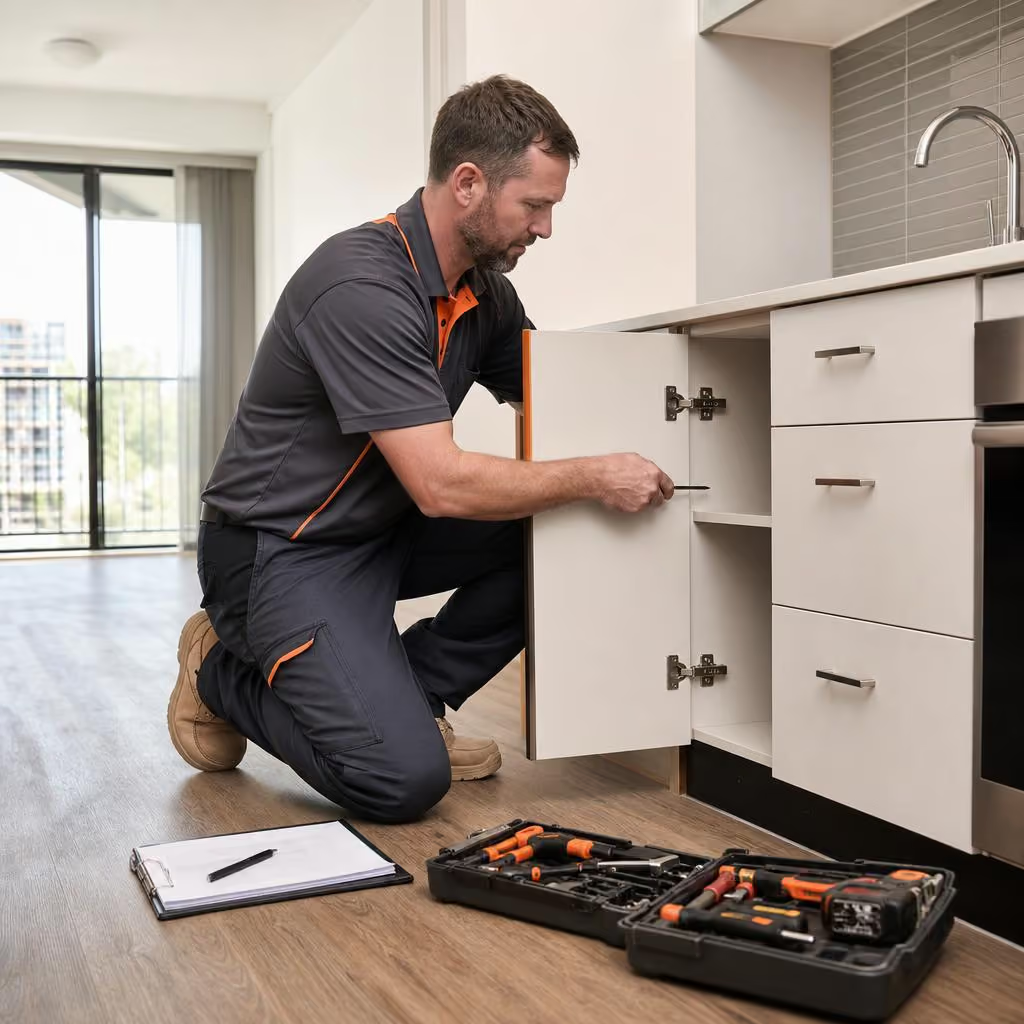
Fix what does not work before what looks tired. Walk the property, write a numbered list, rank items by function, safety and visibility, then scope each repair separately. Do not conceal defects you know about, do not assume repairs raise your sale price, and send electrical, plumbing, structural, roof and pool matters to licensed people.
The principle: function first, finish second
Buyers and their inspectors notice things that do not work. A sliding door that sticks, a wardrobe door off its track or a window that will not latch tells a visitor that the house has been put up with. Fresh paint on top of those faults does not change the impression for long. So the order for a pre-sale list is simple: things that must work, things that are unsafe, things that are obvious on entry, and only then cosmetic polish.
This guide is general planning information, not legal or valuation advice. A licensed trade or building inspector can assess anything beyond cosmetic and minor repairs. We do not claim that any repair increases sale price.
Redcliffe sellers range from owners of detached houses to owners of units and townhouses, and the same list does not suit both. Our Redcliffe service page describes how we travel to the suburb and the sort of small work we take on.
Walk the property like a stranger
Start at the street and move through the property in the order a buyer would. Open and close every door, window, gate, cupboard and drawer. Run your hand along handrails. Press switches, but note rather than fix anything electrical that misbehaves. Photograph each fault close up and from a step back, and give it a number and a room.
Write what you see, not what you guess
Record "bathroom door drags on floor at latch side" rather than "house has settled". You are listing symptoms, not diagnoses. A handyman can usually fix the symptom if the cause is a loose hinge; if the cause is unclear, the item moves to an inspection list.
Triage table: what goes first
| Priority | Examples | Who usually acts |
|---|---|---|
| 1. Safety and security | Loose handrails, locks that do not work, windows that will not latch, trip hazards at entries | Handyman for hardware and fixings; licensed trades for anything electrical, structural or pool related |
| 2. Must work | Sticking doors, drawer runners, tap washers that drip, fly screens, gate catches, blind cords | Handyman for fittings; plumber for plumbing faults |
| 3. Obvious on entry | Cracked or loose tiles at the entry, blown silicone, scuffed doorframes, dented walls near the front door | Handyman, scoped item by item |
| 4. Cosmetic | Touch-up paint, hook holes, tired trim, dull door furniture | Handyman or painter, after approvals |
| 5. Unclear cause | Recurring cracks, stains on ceilings, soft timber, musty smells | Assessment first; do not patch over it |
Patching a stain on a ceiling without finding the moisture source is not a repair. Do not conceal known defects. Ask a solicitor about your disclosure obligations; we cannot advise on those.
Itemise the scope so quotes compare
A line that says "general repairs" invites a vague quote. Break the list into single items with a location and a short description of the fix wanted: "adjust and re-hang laundry door, check latch alignment" or "replace missing cupboard handle, kitchen, bottom left". Each line can then be approved, deferred or dropped without touching the others.
Pre-visit checklist for sellers
- Numbered list with room, photo reference and priority
- Agreed scope and budget
- Keys and available access times
- Paint colours and brands, or spare paint, if you have them
- Separate list for licensed-trade items
- Decision on which cosmetic items you will skip if time runs short
- A deadline that leaves room for paint and sealant to cure before photography or inspections
What a handyman should not be doing
Keep these off the handyman list: electrical wiring and switchboards, plumbing inside walls, hot water systems, pool barrier compliance, structural repairs, roof work and anything at height, and any material that might contain asbestos. The Queensland Government states that asbestos was common in homes built before 1990 and that, if unsure, material should be assumed to contain it until accredited testing says otherwise. Do not drill, sand, cut, scrape or blast suspect sheeting, eaves or old flooring before you sell.
Sequence the work
- Hardware and fittings first, because adjustments can mark paintwork
- Patching and sanding next, with dust sheets and ventilation arranged
- Paint touch-ups after patches have dried to the manufacturer instructions
- Silicone and sealant late, with time to cure before wet-area use
- Cleaning last, after tradespeople have left
Exterior items such as gate latches and letterboxes can run in parallel. For larger outdoor projects, explore our decking, fencing and aluminium enclosures.
Questions answered
Should I paint the whole house before selling?
Not necessarily. Address functional problems first, then consider the existing finish, your budget and the scope of any cosmetic work. We cannot promise any price effect.
Do I have to tell buyers about defects I have repaired?
Disclosure rules are a legal question. Ask a solicitor; this guide does not give legal advice.
Can you quote from a list?
Often for straightforward items. Email photos separately; the quote form accepts text only.
Can you check my property for asbestos?
No. Treat suspect material as asbestos until accredited testing says otherwise and speak to a qualified specialist.
Sources
Research checked 16 October 2026. External sites may change.
- Queensland Government: asbestos in the homeAsbestos before 1990 and what not to disturb.
- QBCC: maintenance workMaintenance as ongoing work to prevent deterioration.
- Moreton Daily: Redcliffe suburb profileLocal suburb context and neighbouring places.
Images on this page are illustrative service photos, not evidence of local completed projects. General information only; not legal, engineering or compliance advice.
Keep reading
What needs doing in Redcliffe?
Often on site and unable to answer calls. Use the quote form, Text us or email your details and photos. Include your name and suburb so we can match them to your enquiry. We will reply when available.