
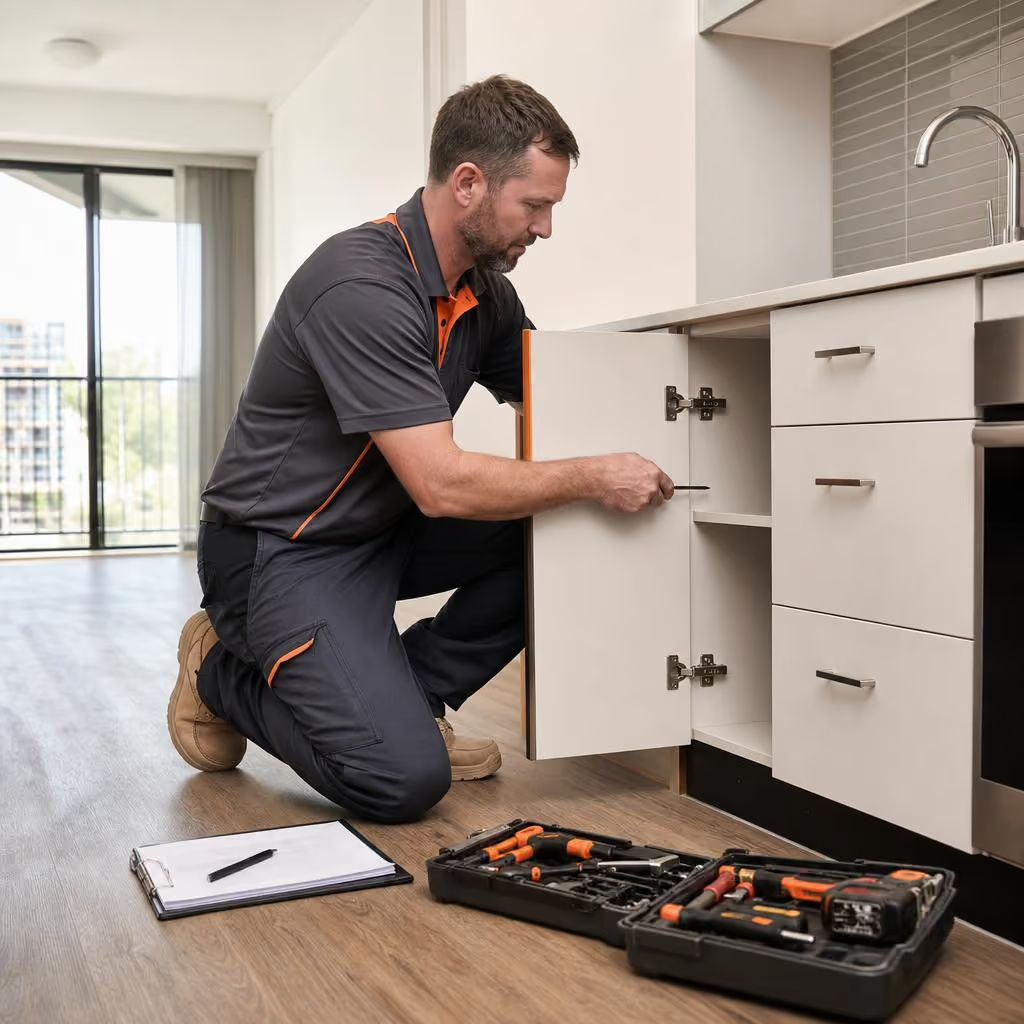
Check parts and instructions before you start, identify the wall and floor material behind any fixing, confirm permission if you rent and follow the furniture maker's anti-tip instructions. There is no universal screw or anchor. If you are unsure what is behind a wall or which fixing suits it, stop and seek competent advice. Never drill suspected asbestos material.
Plan before opening the first box
Flat-pack projects go wrong in the first ten minutes: parts counted wrongly, a panel facing the wrong way, an instruction booklet that does not match the model. A short planning step prevents most of it. Find the model name and number, locate the instructions, and lay out the parts against the parts list before assembling anything. Missing or damaged parts are much easier to resolve with the retailer before the furniture is half built.
Moreton Daily describes Kippa-Ring as the central retail and commercial area of the peninsula, so many readers are likely to have bought furniture locally. This guide applies to any flat-pack, from anywhere. It is general information, not a certification of any installation. Our Kippa-Ring service page explains the assembly and mounting work we take on.
Assembly planning checklist
- Model name and number noted, and instructions found or downloaded
- All parts and fittings counted against the parts list
- Space cleared, including a soft surface to protect panels
- Doorway and stair access checked for the finished piece
- Final position chosen so you will not need to move it assembled
- Anti-tip hardware located in the pack or ordered separately
- Tools listed in the instructions available
Decide where it will live before you assemble
Tall items such as wardrobes and bookcases are easiest to assemble lying down, then stand up in place. Check ceiling height and any obstacles at the moment of tilting. Think about skirting boards, uneven floors and window sills behind the piece, because each affects how it sits and where an anti-tip fitting can go.
Anti-tip anchoring: why materials decide the answer
Product Safety Australia explains that toppling furniture and televisions are a recognised hazard in homes, that anchoring suits the particular wall and floor material and that manufacturer instructions come first. It also says that a TV placed on furniture needs that furniture anchored too. We do not give a universal fixing recommendation here, because there is none: plasterboard over studs, hollow plasterboard, brick, block and concrete each need a different approach.
| Question | Why it matters | If unsure |
|---|---|---|
| What is the wall made of? | The fixing must suit the material and the load | Seek competent advice; do not guess |
| What does the manufacturer supply or recommend? | Instructions set how the anti-tip device attaches | Contact the manufacturer or retailer |
| Are there services behind the wall? | Cables and pipes can be hit by drills | Stop; ask a licensed trade |
| Could the material contain asbestos? | Disturbance can release fibres | Do not drill; assume asbestos until tested |
| Are approvals needed? | Shared walls and common property may have restrictions | Check before drilling |
| What is the floor like? | Carpet, tile and floating floors affect stability and fixings | Follow product instructions |
TV on a unit versus TV on the wall
These are separate jobs. Mounting a TV to a wall relies on the wall construction and the bracket rating. Placing a TV on furniture relies on the furniture being stable and anchored. Do not treat anchoring the TV to the unit as a substitute for anchoring the unit itself. Where the wall behind is uncertain, a qualified person should assess it before a bracket goes up.
Wall construction, approvals and hidden hazards
In unit complexes, check whether the wall is part of your lot or common property and obtain any required approvals. If the building was built before 1990 and the wall lining is unknown, the Queensland Government advises treating material as potentially asbestos-containing until accredited testing says otherwise and not drilling, sanding or cutting it. Electrical and plumbing issues, such as a wall that already feels warm or damp, belong with licensed trades.
- Any required written approvals
- A safe fixing method from the manufacturer
- An agreed finish around the fixings
- Competent advice if the wall is unknown
You can describe an assembly or anti-tip job through the quote form and email photos separately. For patching after removal, see our Margate patching guide.
Questions answered
Is there one correct anchor for all walls?
No. The correct anchor depends on the wall and floor material and the furniture manufacturer instructions.
Do I need to anchor a short chest of drawers?
Follow the manufacturer instructions. Product Safety Australia treats toppling furniture as a hazard in homes generally.
Can every wall take the same fixings?
No. Wall construction, the load and hidden hazards determine the fixing method. Check any applicable approvals before work starts.
Can you certify my installation?
No. We provide practical assembly and fitting, not certification.
Sources
Research checked 16 October 2026. External sites may change.
- Product Safety Australia: toppling furniture and televisions guideAnti-tip anchoring depends on wall and floor material; follow manufacturer advice.
- Queensland Government: asbestos in the homeTreat uncertain material as asbestos until tested.
- Moreton Daily: Kippa Ring suburb profileLocal suburb context and neighbouring places.
Images on this page are illustrative service photos, not evidence of local completed projects. General information only; not legal, engineering or compliance advice.
Keep reading
What needs doing in Kippa-Ring?
Often on site and unable to answer calls. Use the quote form, Text us or email your details and photos. Include your name and suburb so we can match them to your enquiry. We will reply when available.